Is Stephanie Golden Camellia Toxic to Dogs and Cats?
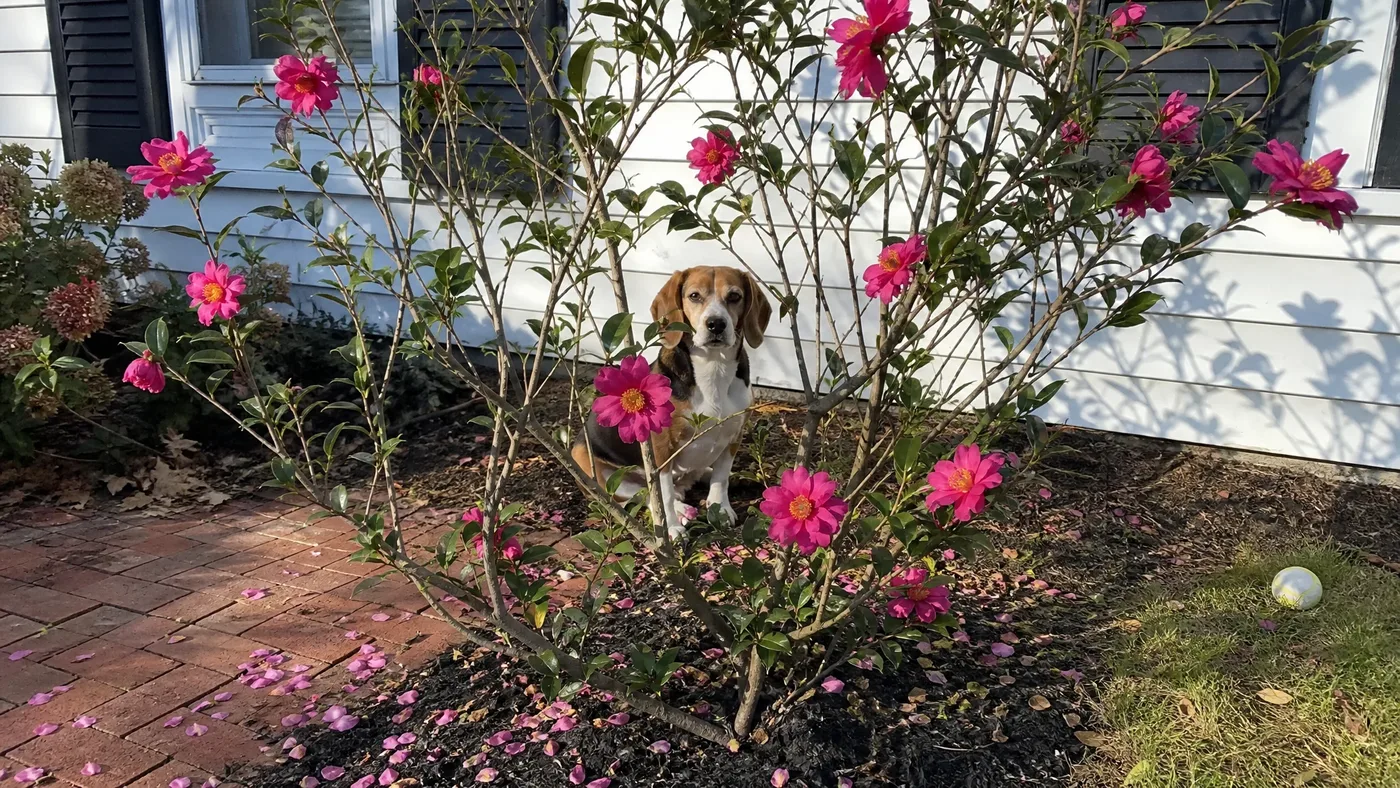
One autumn a neighbor's dog trotted straight through a bed of blooming camellias, scattering pink petals across the lawn, and the question that followed over the fence was the one we still hear every fall: "Is that going to make him sick?" The honest answer takes a little untangling, because sasanqua camellias bloom just when pets are most active in the yard.
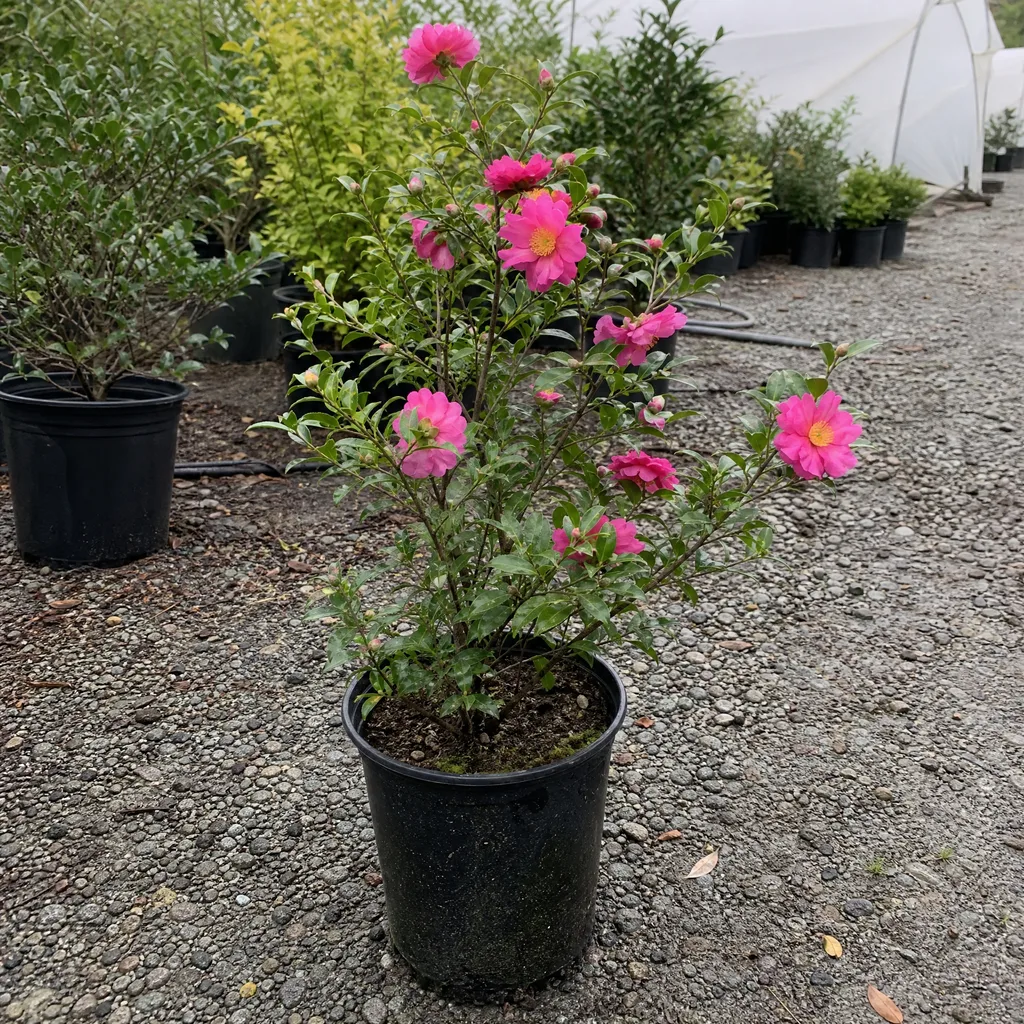
This article talks about whether Stephanie Golden Camellia is a danger to dogs, cats and children and answers the questions customers ask us most. Read on to learn what the sources say about each part of the plant, what a nibble usually means, how fallen flowers and the tea relationship fit in, which signs to watch for, and which garden products deserve more worry than the shrub.
No Part of Stephanie Golden Camellia Is Listed as Poisonous
The belief we hear first is that a plant this pretty must have something wrong with it somewhere, in the leaves, the seeds or the roots. When we go looking in the sources, that belief does not hold up, though we want to be exact about what they cover and what they leave out.
The ASPCA entry for camellia reads Non-Toxic to Dogs, Non-Toxic to Cats, Non-Toxic to Horses. That entry is written for Camellia japonica, the cousin of our sasanqua, and not for the sasanqua itself. We say so plainly because a careful pet owner deserves to know the exact name on the label.
The second source speaks more broadly. A University of Florida extension office looked into the matter after dogs were seen eating camellia blossoms, and its answer was that all parts of the camellia plant are safe. That covers the genus as a whole, and Stephanie Golden is a hot pink, semi-double sasanqua that sits squarely inside it.
What the Evidence Does and Does Not Say
Put together, the evidence points one way. We found no source that flags any part of this cultivar as a poison, and two reputable ones that call the genus safe. What we cannot offer is a test that names Stephanie Golden specifically, because none of the sources we rely on does.
So our position is this: you can plant it near a yard your pets use without losing sleep. Eating a lot of any plant can still upset an animal's stomach, which is true of grass and tomato vines too, so "not listed as toxic" never means "a meal."
A Curious Cat and Stephanie Golden Camellia
Cats worry people more than dogs do, partly because they are smaller and partly because they chew with such quiet determination. Customers usually ask us whether a single nibbled leaf is cause for a call to the vet. Camellia is non-toxic to cats, and that holds for every part of the plant, so a nibble is an ordinary event and not an emergency.
What a nibble usually means is a bored or curious animal sampling something glossy. The leaves of this shrub are dark green and leathery, which makes them a poor snack, and most cats spit them out after a bite or two. The flowers are a different matter in the sense that they are soft and fall within reach, and a cat may bat them around for an afternoon.
Where we would pay attention is the pattern, not the single bite. A cat that chews the shrub daily, or one that seems unwell afterward, is telling you something about the cat, and a vet should hear about it whatever the plant turns out to be.
If your cat is an indoor animal that you are bringing a cutting to, keep it simple: a cut branch in a vase is still just camellia, but the water, any floral preservative and the fallen debris are separate things to think about.
Surely the Fallen Flowers Are Dangerous
People tend to feel that a petal on the ground is worse than a petal on the branch, as if decay changed the plant into something else. Sasanqua flowers are open from fall into early winter, and for a few weeks the ground under a mature shrub looks like a confetti parade. Dogs love to roll in it and sometimes to carry a mouthful off, which is exactly the moment the question gets asked.
Fallen petals are the same tissue as the flowers on the branch, only older. The sources that call the blossoms safe give no reason to treat them differently once they drop, and the flowers on this plant are modest in size, around 2 to 3 inches across for the species. A dog does not get much from them, and we have never found them a reason to rake in a hurry.
Where Fallen Litter Does Cause Trouble
The trouble with litter has less to do with the plant and more to do with what sits in it. Wet petals and leaves left in a thick mat can grow mold, and they can hide slugs, fallen fruit from other trees, or whatever a neighbor's sprayer drifted onto them. That is a reason to tidy up now and then, not a reason to fear the shrub.
Our habit is to rake the bed once the bloom is over, drop the litter in the compost, and keep the mulch layer fresh and off the stems. A clean bed protects the plant as well, since it removes places where pests overwinter.
Camellia Sinensis Is Tea, so Is This Safe?
This is the belief that surprises people most. Camellia sinensis is the plant tea is made from, and sasanqua belongs to the same genus. Some customers conclude that because tea is something people drink, the sasanqua in the yard must be safe in every way, or the opposite, that anything related to tea must carry something an animal should not touch.
Both conclusions skip a step. Being in the same genus tells you the plants are kin, not that they act alike when eaten. Stephanie Golden is grown as an ornamental, for its hot pink flowers with bright yellow stamens and its glossy foliage, and none of the sources we use treats its leaves or flowers as food or drink for people or animals.
Our advice is to keep the two ideas apart. Treat the sasanqua as a landscape shrub that happens to be safe around pets, per the sources above, and do not brew it, steep it or feed it to anyone. If a recipe or a website tells you otherwise, ask your local extension service before acting on it.
There is one more practical point about the tea relationship. If you hear a claim about the "camellia" in your garden, check which species it is about. Stephanie Golden is a sasanqua, which is not the same plant as the tea camellia or the japonica our comparison of the two describes.
Sensible Habits for Children Around Stephanie Golden Camellia
Parents ask us this more quietly than pet owners do, and they deserve a straight answer. The sources we rely on say nothing alarming about this shrub, and the Florida note calls all parts of the camellia safe. Even so, we do not write medical guidance, and no extension source we know of invites children to eat any garden plant.
So the habit we recommend is the one that works for every plant in a yard. Children learn early that flowers and leaves from the garden are for looking at, not for the mouth, and that rule protects them from plants far less friendly than a sasanqua.
- Teach the rule that garden plants are not snacks, and repeat it at planting time, when the bed is new and interesting.
- Wash hands after digging, mulching or handling fertilizer, because the soil and the products in it matter more than the flowers.
- Keep sprays, granules and bags locked away, and never let a child help with them.
- If a child swallows a plant part and seems unwell, call poison control or your doctor, and bring the plant name along.
Beyond that, this is a pleasant plant for a family yard. It is evergreen, it flowers when most of the garden has gone quiet, and a child can fill a basket with petals in November without harm.
Pets Show Symptoms Right Away, Don't They?
Many owners expect trouble to arrive within minutes, so they relax if the dog seems fine after an hour. Real life is less tidy. Some animals show nothing for hours, and others get a mild stomach upset from simply eating too much plant matter of any kind, camellia included.
That is why we suggest watching the animal and not only the shrub. The signs below are general cues for any plant exposure, and they are not a diagnosis of anything from this cultivar.
Signs Worth Watching
Vomiting, drooling, loose stool, unusual tiredness and a sudden loss of appetite are the common ones. A single episode after a big mouthful of petals is less worrying than several in a row, or an animal that seems quiet and off its normal routine.
| What you see | What we would do |
|---|---|
| One brief upset after chewing petals | Offer water, keep watch, and call a vet if it repeats |
| Repeated vomiting or loose stool | Call your vet the same day |
| Lethargy, drooling or refusal to eat | Call your vet or a pet poison hotline promptly |
| Any exposure to sprays or fertilizer | Call right away with the product label in hand |
When to Pick Up the Phone
If you are worried, call. Bring the plant name, the amount you think was eaten, the time, and the product label if a spray or fertilizer was used near the plant. A vet would rather hear from you early than late, and that information is what they ask for first.
Mulch and Fertilizer Matter More Than Petals
If we could change one thing about how people think of this topic, it would be where they look. The shrub is the quiet part of the picture. The products used around it are where we would be careful, since labels vary and none of the sources we use vouch for any particular bag or bottle.
A sasanqua likes acidic, well-drained soil rich in organic matter, so most owners add mulch, compost and an acid-type fertilizer. Those are the right things for the plant, and the schedule in our fertilizing guide covers them. For pets, the rule is to read the label, follow the dose, water granules in, and keep animals off the bed until the product has settled.
Pest control is the other area. Camellias can attract tea scale, aphids and spider mites, and a sprayer used in a hurry can leave residue on leaves that a cat or dog might lick. Our pests and diseases guide describes gentler first steps.
| Product | Why it matters for pets | Safer habit |
|---|---|---|
| Fertilizer granules | Dogs may eat what they smell | Water in and keep pets off the bed |
| Insecticide sprays | Residue stays on leaves | Let it dry fully before pets return |
| Mulch | Some products carry additives | Read the bag, ask your vet about unfamiliar ones |
| Stored bags | Easy to knock over and chew | Store in a closed, high place |
In our rows, the only time a pet has truly worried us was around a freshly spread product, never the plants themselves.
Stephanie Golden Camellia and Pets, Settled
Here is where we land. No source we found lists any part of Stephanie Golden, or camellias in general, as poisonous to dogs or cats, the ASPCA entry is for japonica and not sasanqua so we say that out loud, and every part of the camellia plant is safe for pets. Fallen petals, curious nibbles and the tea relationship are not reasons to avoid planting it.
What deserves your attention is the garden around the shrub: the sprays, granules and stored bags, and above all your own animal. Watch the dog or cat and not the plant, and if something seems off, call a vet and tell them everything you know. That small habit has settled more fence-line worries than any plant list.
Stephanie Golden Camellia
Nursery-grown Stephanie Golden Camellia in sizes from 2.5 Quart, shipped to your door.
From $37.93
Shop Now →Soil that drains well, leans acidic and is rich in organic matter is what Stephanie Golden gets in our rows. Every top-quality shrub we ship comes out of our own farms in the same way. Once you have decided this camellia suits a yard shared with your dogs and cats, come have a look at our shop.