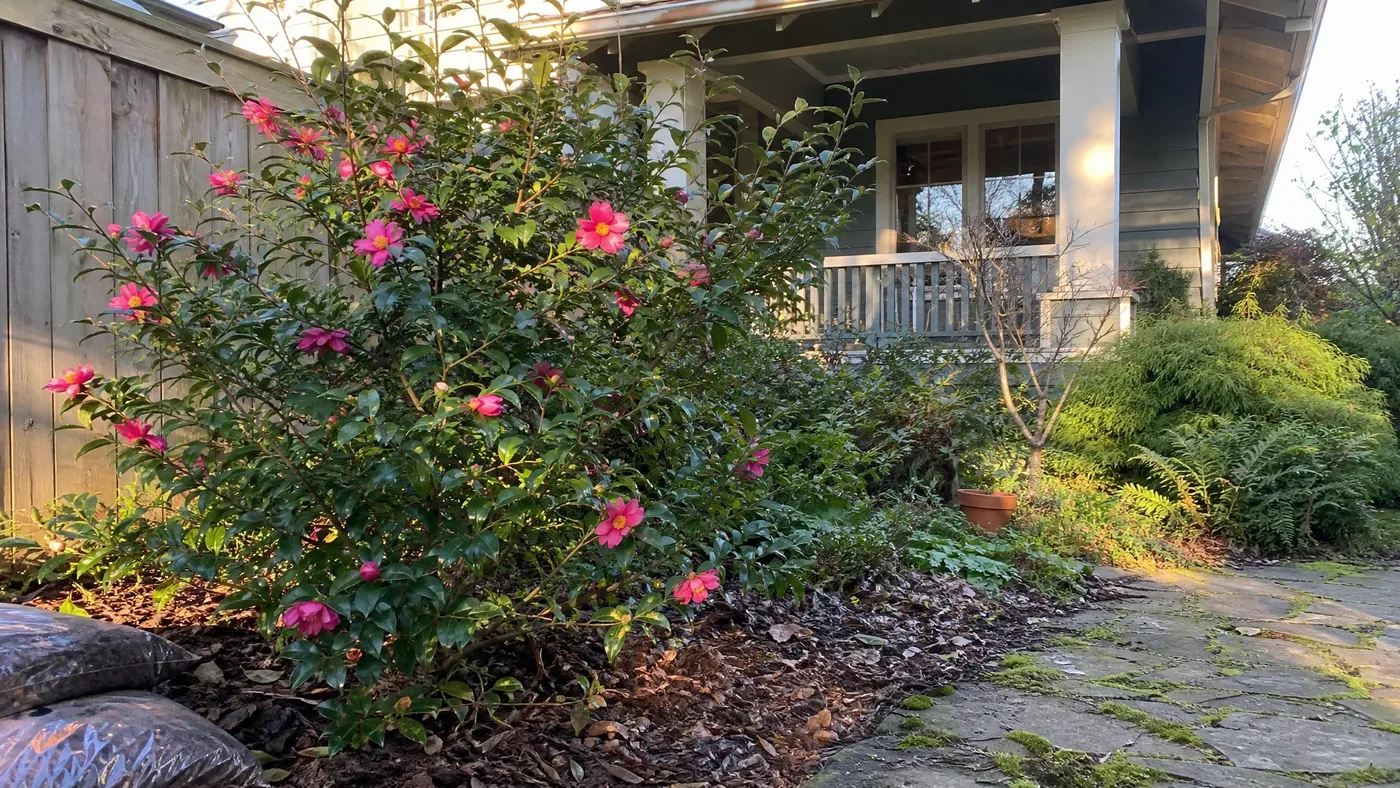
Is Stephanie Golden Camellia Deer Resistant? What to Know
Deer damage on a camellia rarely looks like a disaster at first. A deer snips the soft tip growth, leaves torn ends behind and moves on. Repeat that night after night and the shrub thins out at browse height and loses its newest growth. A shrub that is browsed back every winter never gets ahead.
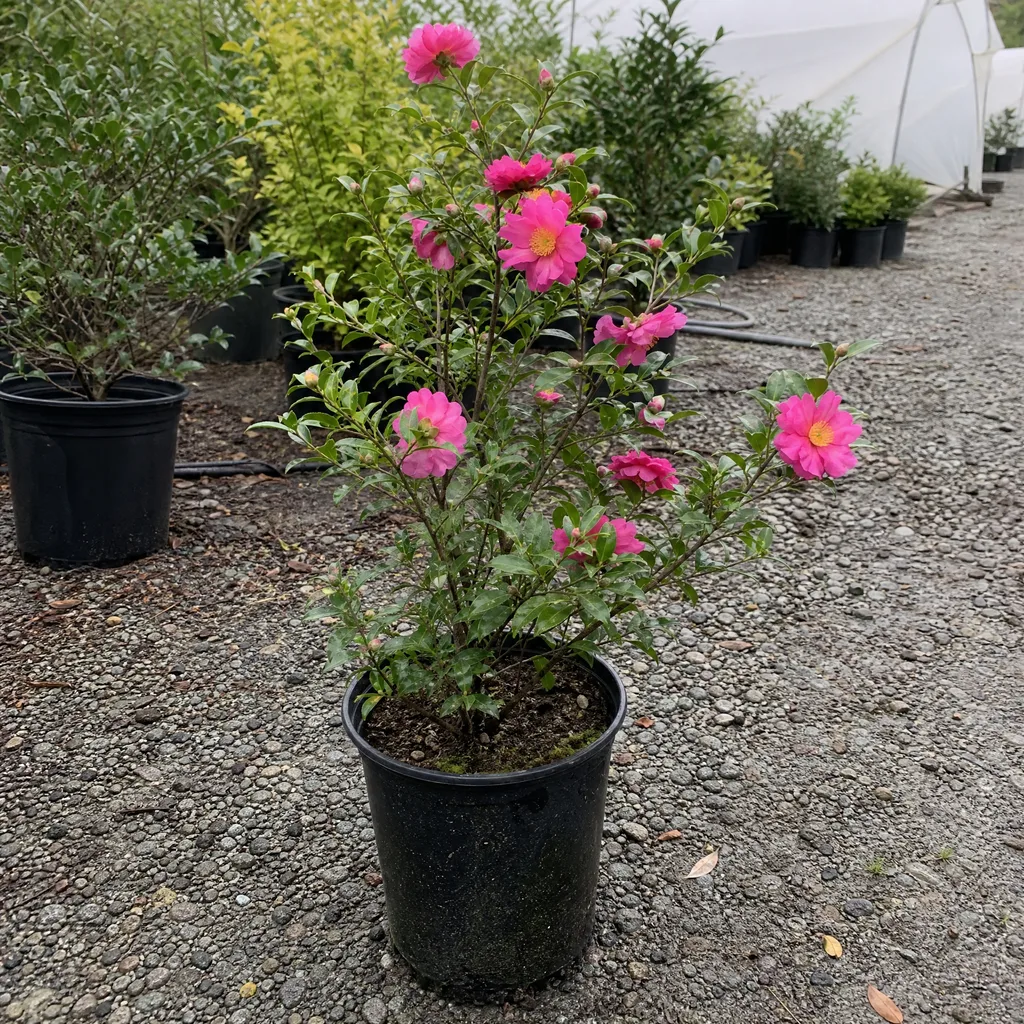
The answer depends on where the plant sits, so this guide goes yard by yard, in this order:
- A narrow side bed beside a fence.
- A windy corner lot with open deer paths.
- A pot on a hot deck.
- A yard where deer walk every night.
Below, you'll find out all about how each yard changes the risk, including what "resistant" really means for this camellia and how to protect young plants through their first winters.
A Narrow Side Bed Beside the Fence
In a tight bed, deer reach is the one thing you can control. A deer has to step into the bed or lean over a fence to get at the shrub, and a strip between a fence and a house wall leaves little room for either. Most of the exposure comes from the open end, where the bed meets the lawn or driveway. Plant Stephanie Golden at the back, as far from that opening as the bed allows, and close the opening with a gate, a panel or a screen of stakes.
Shape and Placement
UF/IFAS lists the cultivar as upright and dense, which suits a narrow bed better than a loose, spreading shrub would. Do not plan around that form alone, though. The species grows 5–7 feet wide, so check the mature size before you plant and leave room to walk the bed. A shrub jammed against the fence ends up with its outer growth poking through, and that is exactly the growth deer can reach.
Fence-Line Conditions
Soil beside a fence or foundation is often builder's fill, so dig the hole and look at what you hit. Camellias are shallow-rooted and must be planted shallowly, which means setting the top of the root ball at or slightly above grade. Our planting guide walks through the hole step by step.
A fence also changes light. A solid fence on the west side shades the afternoon, which camellias like, while a south wall can bake the bed. Our sun and shade guide covers how to read your bed. Eaves leave a dry strip under them, so check moisture by hand rather than trusting the rain.
Stephanie Golden Camellia on a Windy Corner Lot
A corner lot gives deer two approaches and gives you no screening, so the shrub is seen and reached from both streets or both yards. Start by walking the lot at dawn or looking for tracks and droppings, because deer follow the same paths night after night. Plant on the side of the house away from those paths, or tuck the shrub into an L formed by the house and a fence, so any approach leads through an obstacle.
Read the Deer Paths First
A path that crosses your lawn will keep crossing it. Put the camellia off that line, not at the end of it. If you cannot move the plant, move the path by adding a fence run, a row of stakes or a dense planting that makes the old route awkward. Deer take the easy way, so a small detour is often enough.
Cut the Wind Without Boxing in the Plant
The species appreciates shelter from afternoon sun, winter winds and cold. On an exposed lot, winter wind dries the glossy evergreen leaves, and a shrub already stressed by wind has less to spare when deer browse it. A solid barrier makes turbulence on its far side, so use a slatted fence or a staked screen that slows the wind. Keep the shrub a few feet back from it.
Cold matters here too. Oregon State lists the species as hardy to USDA Zone 7, and an open corner is the coldest place on most lots. If you are near the edge of its range, our winter care guide covers what to add.
A Pot on the Hot Deck
A potted camellia on a deck has two separate problems, and deer is usually the smaller one. Heat comes first. UF/IFAS says sasanqua camellias tolerate full sun but do best when protected from harsh afternoon sun, and a pot on boards that soak up heat is about as harsh as afternoon sun gets. A dark pot also warms the roots, and the soil dries far faster than it would in the ground.
Deer are still possible. A low deck with open steps is not a barrier, and a pot at the edge is as reachable as a shrub in a bed. A tall deck, a screened porch or a spot against the house wall is much safer.
Deck Checks Before the Pot Goes Out
Run through these in order before you settle on a spot:
- Move the pot to where the house or a railing shades the afternoon sun, away from the steps.
- Check that the pot has drainage holes and that the water runs out freely, because poor drainage is what lets root rot start.
- Keep the mix evenly moist in summer, since Arkansas Extension notes camellias like acidic soil and even moisture in the summer.
- Top the mix with mulch to slow evaporation and shade the surface.
- In winter, pull the pot in against the wall rather than leaving it on open boards.
Our container guide covers pot size and mix in detail.
Stephanie Golden Camellia Where Deer Walk Nightly
If deer cross your yard every night, stop thinking of this camellia as resistant and start thinking of it as a plant that needs protection. We say that because the rating behind "resistant" is a mild one, as the next section shows. With steady pressure, a few nibbles become a pattern, and the plant that was fine in year one is thin by year three. Work through these steps in order and stop when the damage stops.
- Confirm it is deer. Deer have no upper front teeth, so they tear twigs and leave ragged, frayed ends. Clean, angled cuts point to rabbits or other animals, and different fixes.
- Fence the plant, not the yard. A cage or cylinder of wire around each shrub is the cheapest barrier. Ask your local extension service what height works in your area.
- Add a deterrent on top. Repellent sprays can help, but they wash off, so reapply after rain and rotate products so deer do not get used to one.
- Move the plant closer to the house. Deer are warier near doors, lights and activity, so a spot beside the entry beats one at the back of the lot.
- Re-judge the site. If a cage and a repellent still cannot hold the line, plant something deer leave alone instead and keep the camellia in a pot on a protected deck.
None of this is special to camellias, but it gets more urgent with a shrub whose glossy evergreen leaves stay on the plant all winter, when other food is scarce. The shrub is on the menu from the first frost to spring.
What Resistant Really Means Here
NC State says the species is slightly resistant to deer browsing, and its attributes list includes deer alongside drought and salt. Slightly resistant means deer may sample it, not that they will skip it. Our own old rating of "moderate" was too generous, and we changed it to match the source. The rating is also for the species. Stephanie Golden has no separate deer rating, so we use the species number.
Many plant lists call camellias deer proof. They are not, and a shopper who believes that skips the cage and loses the shrub. Customers usually ask us whether "resistant" means they can plant and forget, and the answer is no, not where deer are hungry.
How Pressure Changes the Result
Resistance is a ranking, not a wall. A deer that has other food passes over a plant it finds unappealing, and a deer that has little food eats it anyway. Use this table as a rough guide, not a forecast.
| Deer pressure | What you will likely see | What to do |
|---|---|---|
| Light | Occasional nibbled tips, little lasting harm | Watch it and keep the plant out of the open |
| Steady | Repeated browsing on outer growth | Cage young plants and use a deterrent |
| Heavy | Thinned, stunted shrub with torn ends | Fence the plant fully or use a pot near the house |
The cultivar's dense habit helps a little, because a full shrub hides its own damage better than a sparse one.
Protecting Young Stephanie Golden Camellia Plants in Winter
A young plant is the most exposed one you own, because it has little wood to lose and its roots are still settling in. Clemson says camellias can be planted any time, but preferably from October to November and from March to mid-April, as long as they are mulched and watered. A fall planting reaches winter with little time to root, so it needs the protection first. If you order from us, plan the arrival date so your cage is up before the plant is.
Before the First Frost
Plant in the right window, set the root ball shallowly and mulch without piling it against the stem. Put the cage in place the same day, not after the first browsing. Water the plant well so it goes into winter hydrated, because dry evergreen leaves are more vulnerable to wind.
Through the Winter
Check the cage every week or two, since snow and deer can push it flat. Reapply any repellent after rain. If a hard freeze is coming, add a breathable cover over the cage and take it off when the weather warms. Our winter care guide covers frost protection in more detail.
After the First Winter
Loosen the cage in spring so it does not rub the branches and prune only after flowering, if you need to. Keep the cage for a second winter if the plant is still small. Take it away only when new growth sits well above where deer can reach, and watch the first season after for fresh damage.
Stephanie Golden Camellia Across All Four Yards
In the narrow side bed, the plant does well: place it at the back, close the open end and it is a good bet. On the windy corner lot, it works if you move it off the deer path and slow the wind with something slatted. On the hot deck, deer matter less than heat, so shade the pot and keep it evenly moist. Where deer walk every night, plant it only with a cage and treat it as protected, not resistant.
Do these in order. First, decide how much deer pressure your yard really has. Next, place the plant and cage it before its first winter. Last, watch the damage each fall and add a barrier if it grows.
Stephanie Golden Camellia
Nursery-grown Stephanie Golden Camellia in sizes from 2.5 Quart, shipped to your door.
From $37.93
Shop Now →Stephanie Golden grows in our beds in well-drained, acidic soil with plenty of organic matter. Each plant is raised on our own farms, and top-quality shrubs are all we grow and sell. If this camellia fits your yard and your deer, begin with one of ours.